
Blog
Low GI Rice vs. Regular White Rice: What’s the Difference?
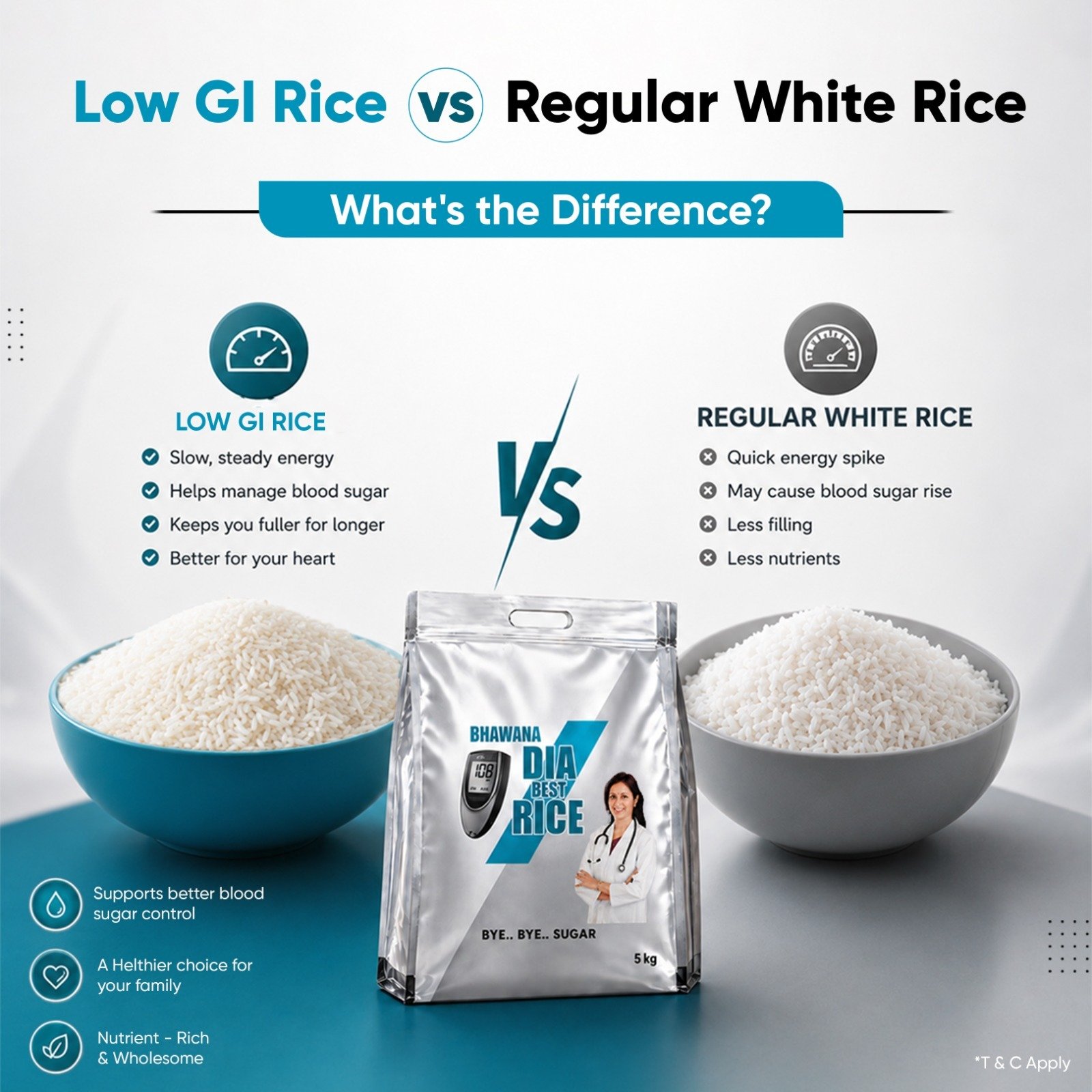
Rice is a staple food in millions of Indian households. From comforting home-cooked lunches to festive celebrations, it finds a place on almost every dining table. However, with growing awareness about nutrition and blood sugar management, many people are beginning to ask an important question, does the type of rice you choose really matter?
The answer is yes. While both varieties may look similar after cooking, they differ in the way the body digests and utilizes them. Understanding these differences can help you make better food choices without giving up your favorite meals.
Understanding the Glycemic Index
The Glycemic Index (GI) measures how quickly carbohydrate-rich foods release glucose into the bloodstream after they are eaten. Foods with a lower GI digest more gradually, while foods with a higher GI tend to release glucose at a faster rate.
This is where low-GI rice stands apart. It is designed to release carbohydrates more slowly, helping provide a steadier supply of energy compared to conventional white rice.
Similarly, low glycemic index rice has become a preferred option for people who wish to make healthier dietary choices while continuing to enjoy rice as part of their regular meals.
How Regular White Rice Differs
Traditional white rice undergoes milling and polishing, processes that remove the outer bran layer and several natural nutrients. Although this improves texture and cooking time, it can also increase the speed at which carbohydrates are digested.
As a result, many people experience a quicker rise in blood glucose after eating large portions of refined white rice, especially when meals lack vegetables, protein, or fiber.
This doesn’t mean white rice must always be avoided. Instead, understanding portion sizes and meal balance becomes increasingly important.
Nutritional Comparison
When comparing rice varieties, the difference goes beyond appearance.
Low GI rice generally offers the following:
- Slower carbohydrate digestion
- Better support for balanced meals
- Improved satiety
- Consistent energy release
- Greater suitability for mindful eating
Regular white rice, on the other hand, remains a familiar staple but may require greater attention to serving size and meal composition.
Which Rice Is Better for People with Diabetes?
People living with diabetes often receive advice to monitor both carbohydrate quantity and carbohydrate quality. This has encouraged many families to explore healthier alternatives.
Specially developed diabetic rice provides an option for those who wish to continue eating rice while making more informed nutritional decisions.
Likewise, diabetic-friendly rice has become increasingly popular because it fits comfortably into balanced meal plans recommended by healthcare professionals.
Although no rice variety can replace medication or medical advice, choosing appropriate foods supports long-term dietary management.
Can Rice Still Be Enjoyed Every Day?
Absolutely, provided meals are planned wisely.
Nutrition experts generally recommend combining rice with vegetables, pulses, lean protein, and healthy fats instead of consuming rice by itself.
Choosing rice for diabetics allows people to prepare familiar Indian dishes while maintaining greater awareness of their overall nutritional intake.
Many households also prefer healthy rice for diabetics because it helps preserve traditional eating habits without unnecessary dietary restrictions.
Cooking Makes a Difference Too
The ingredients served alongside rice have a significant impact on the nutritional quality of a meal.
Simple healthy rice recipes prepared with seasonal vegetables, lentils, herbs, and mild spices naturally create better-balanced meals than heavily processed alternatives.
Popular low GI rice recipes include vegetable pulao, spinach rice, tomato rice, lemon rice, mixed vegetable bowls, and moong dal khichdi.
These dishes also represent excellent healthy Indian recipes, proving that wholesome food can remain delicious without becoming complicated.
How to Select the Right Rice
Shopping for rice should involve more than choosing the brightest grains or the lowest price. Consumers should also consider nutritional value, processing methods, and product quality.
Selecting the best rice for diabetics means looking for rice developed to support healthier eating patterns while maintaining excellent cooking quality and taste.
Many health-conscious families are also choosing sugar-control rice as part of an overall lifestyle that includes balanced meals, regular exercise, and routine health monitoring.
Easy Availability in Andhra Pradesh and Telangana
Health-focused food choices have become easier than ever before. Consumers looking for specialized rice can conveniently book low GI rice in Andhra Pradesh through trusted suppliers offering authentic products.
Families can also book low GI rice in Telangana, making healthier rice options accessible across different regions.
Those who prefer home delivery can simply order low GI rice in Andhra Pradesh, ensuring convenience without compromising quality.
Similarly, customers may order low GI rice in Telangana, allowing nutritious rice to reach their homes with ease.
The increasing popularity of diabetic rice in Andhra Pradesh reflects a growing awareness that better health often begins with everyday food choices.